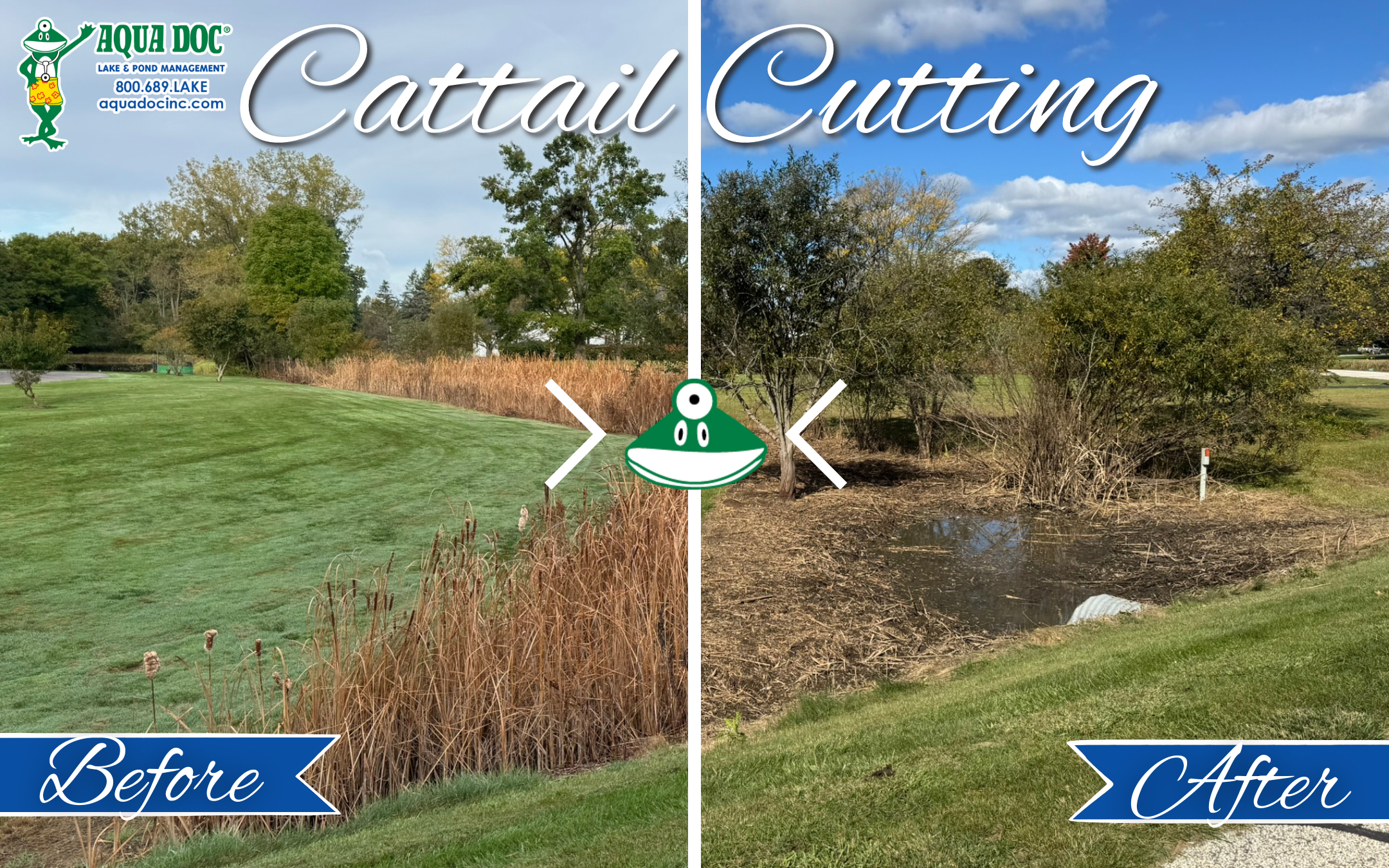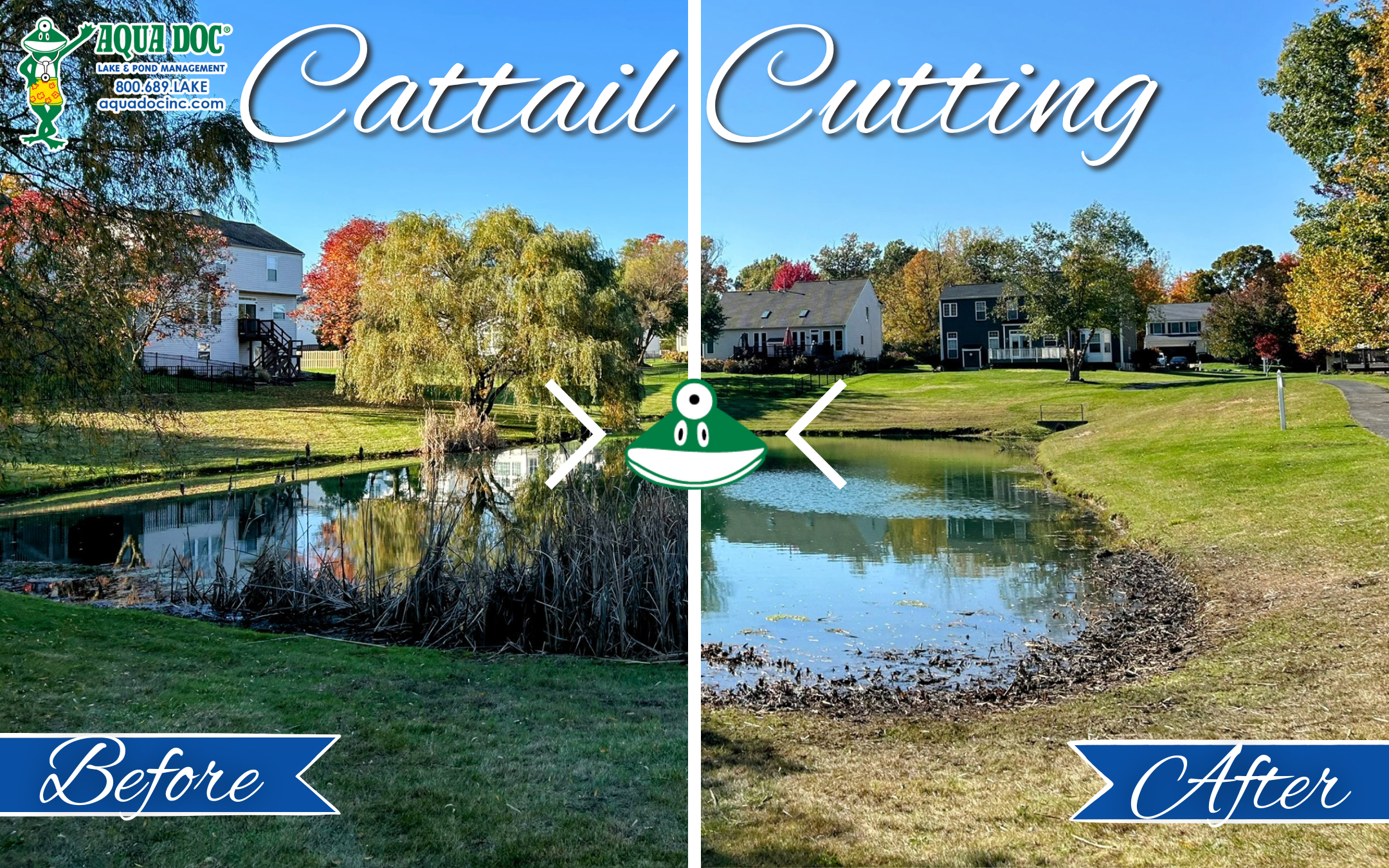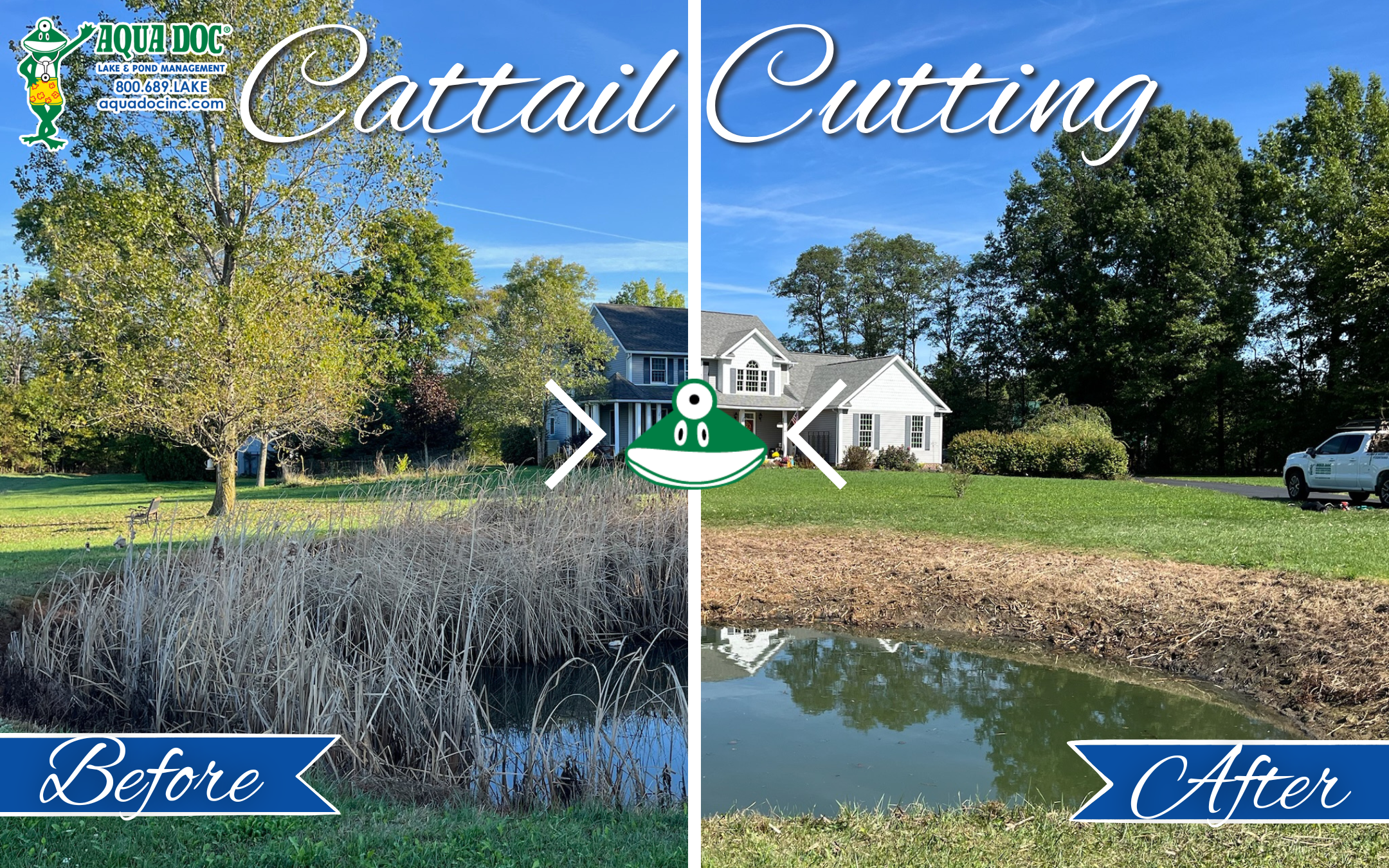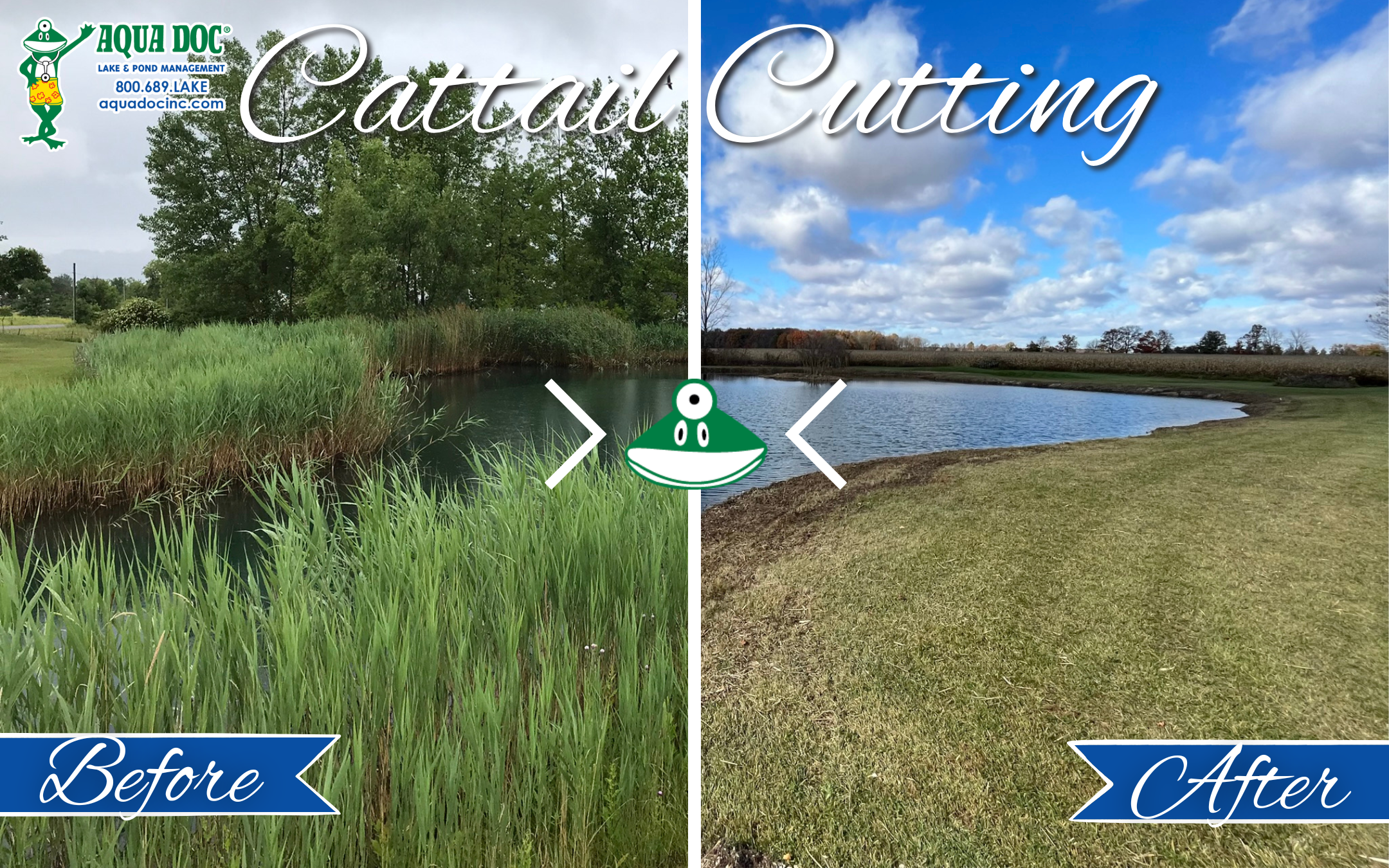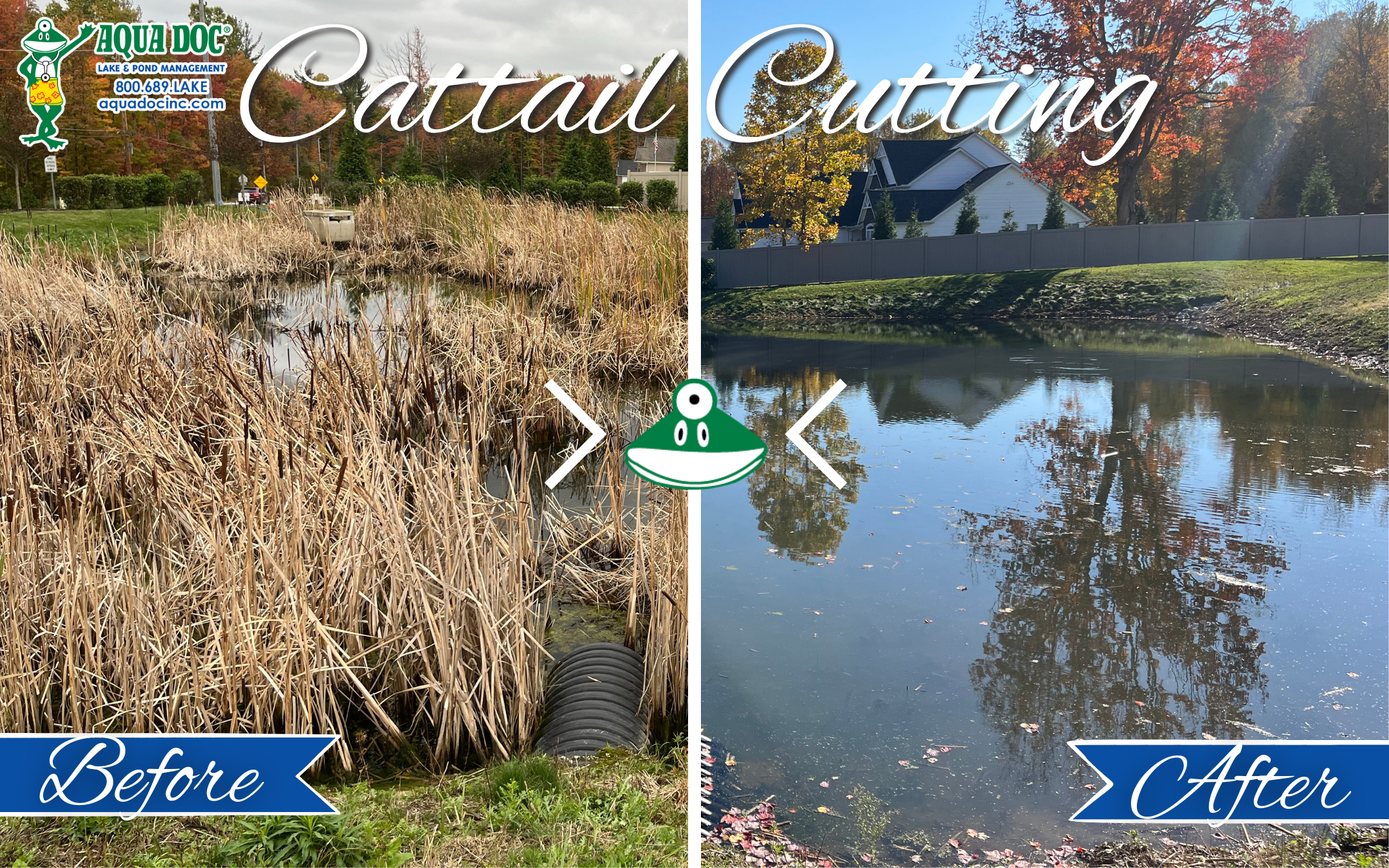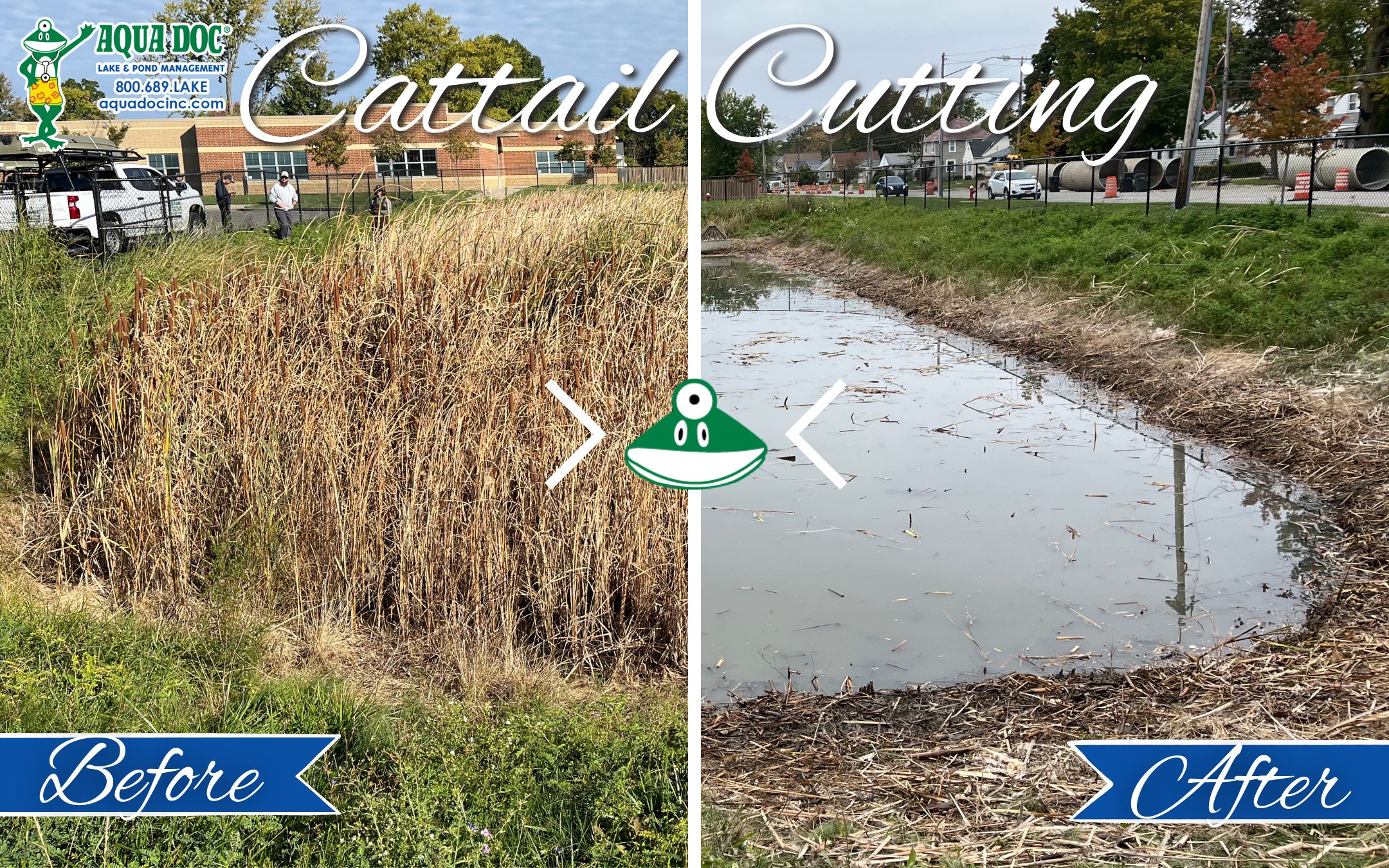
As autumn settles in, the serene water in ponds, lakes, and wetlands are often surrounded by tall, graceful cattails. While they add a beautiful natural touch to aquatic environments, cattails can quickly become invasive if left unmanaged. Autumn marks the perfect opportunity to start managing and trimming cattails—and here’s why it’s crucial to keep them in check.
What are Cattails?
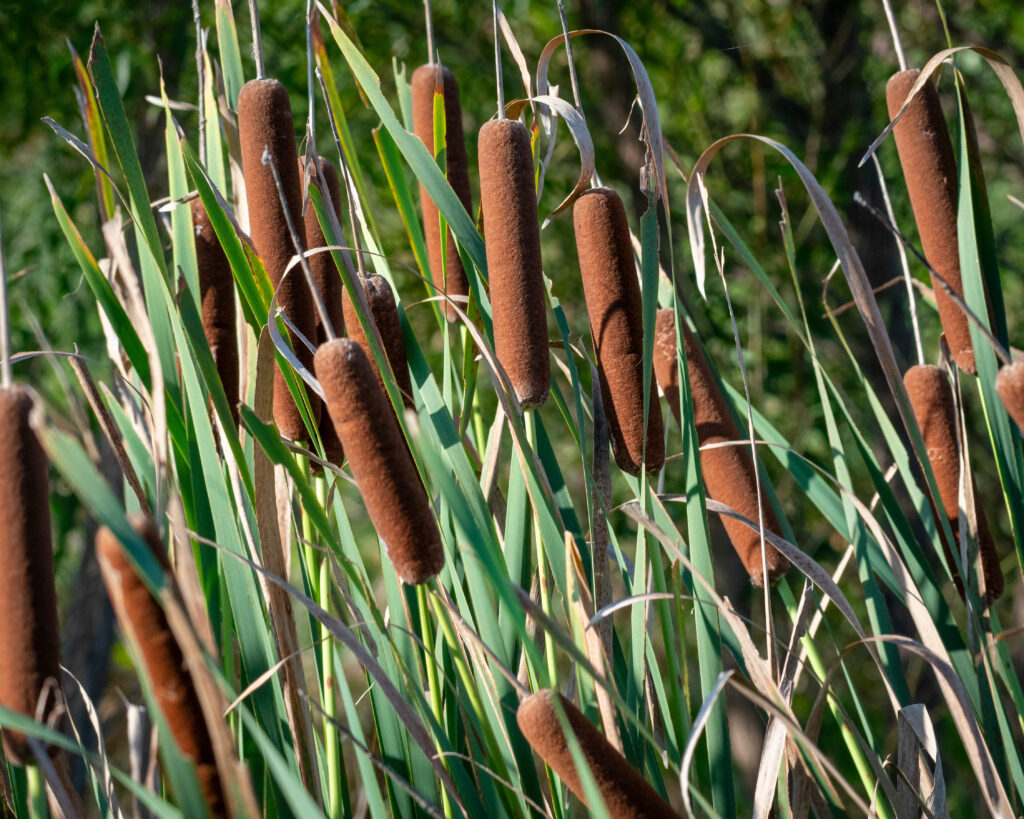
Cattails (Typha spp.) are hardy aquatic, emergent plants commonly found around the edges of ponds, lakes, and wetlands. Known for their iconic brown flower spikes, they play a beneficial role in their natural habitat: filtering water, provide habitat for wildlife, and stabilize shorelines.
However, without regular management, cattails can take over a pond, reducing biodiversity and hindering the aesthetic and functional aspects of your waterways.
Why Should You Cut Cattails?
1. Prevent Overgrowth
Cattails spread rapidly through their rhizome systems, which can quickly overtake a pond or wetland if left unchecked. Overgrowth not only crowds out other beneficial aquatic plants, but can also cause problems for water quality by reducing water circulation.
2. Maintain Water Flow
Thick patches of cattails can impede the natural flow of water in your pond, increasing the risk of clogging filters, pumps, and other aquatic equipment. This can lead to poor water quality, causing algae blooms and making maintenance a headache.
3. Support Biodiversity
While cattails provide shelter for certain wildlife, too many can reduce habitat diversity. By trimming them, you create a more balanced environment that encourages a wider range of native plant and animal life to thrive.
4. Aesthetic Appeal
A pond should be a tranquil, beautiful space. When cattails are left to grow unchecked, they can quickly become an eyesore, overtaking the visual appeal of the water feature. Trimming them back maintains a cleaner, more inviting look that complements your landscape.
5. Prepare for Winter
Cutting cattails in the fall, before they die back, helps to remove excess plant matter that would otherwise decompose in the water. This decaying vegetation can lead to murky water and increase nutrient levels, fueling algae growth during the warmer months.
When Is the Best Time to Cut Cattails?
Late summer to early fall is the ideal time to trim cattails. By cutting them at this point in the season, you prevent them from releasing seeds and spreading further. Using proper tools and techniques is essential for effective management.
Eco-Friendly Cattail Management
At AQUA DOC, we prioritize environmentally friendly pond management. We recommend cutting cattails manually or using equipment designed to minimize disruption to the surrounding ecosystem. If you’re dealing with a large infestation, our team can assess your pond and develop a sustainable management plan to keep your cattails under control.
Keep Your Pond Healthy Year-Round
Managing cattails is an essential part of maintaining a healthy and beautiful pond. Don’t wait until they’ve taken over—act now during cattail season! For more information on managing your pond, reach out to AQUA DOC for expert guidance and services tailored to your needs.